
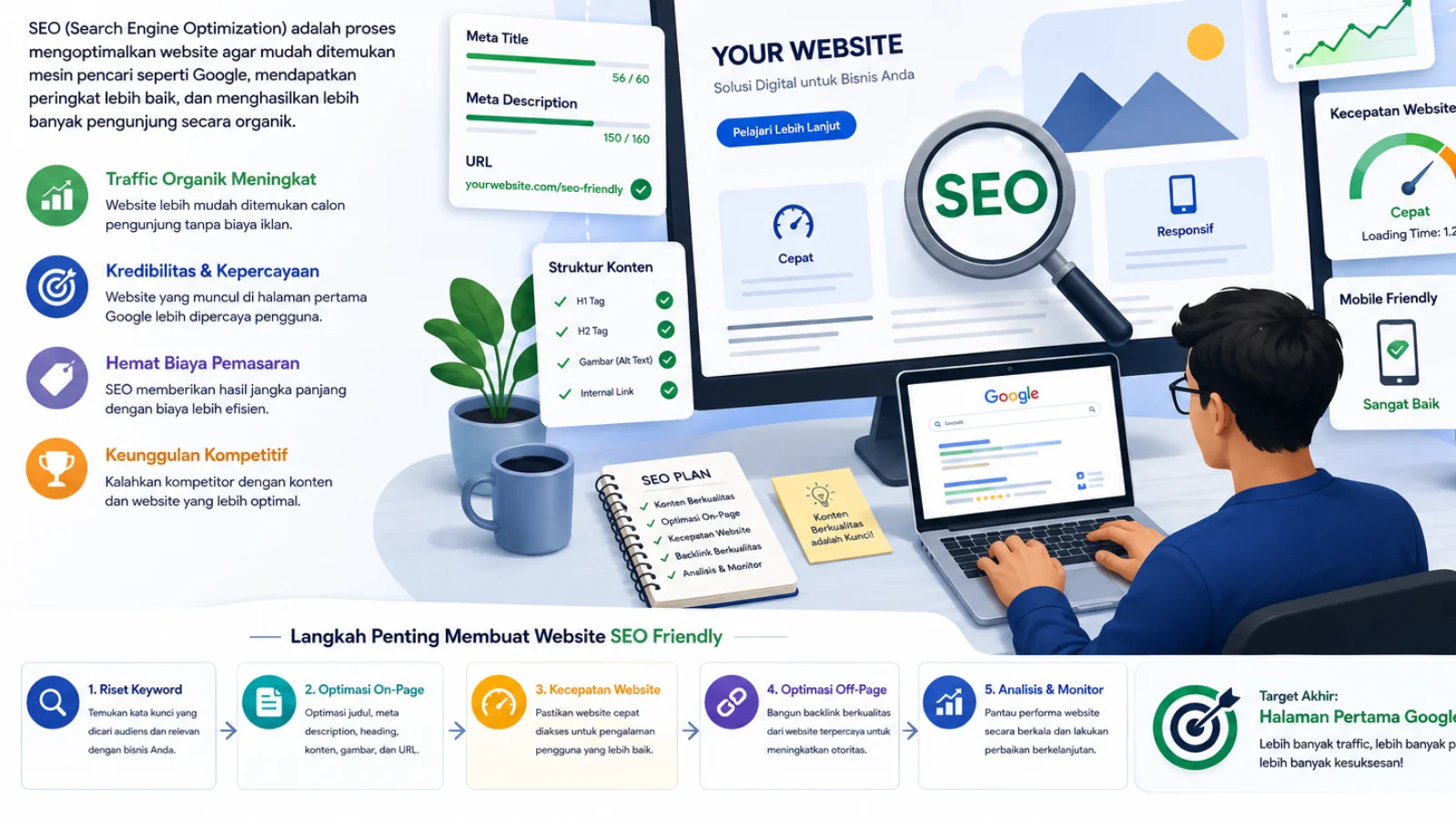
A Comprehensive Strategy for Turning Your Website into a Traffic Magnet
A visually stunning website is only the first step in the digital world. If your website were a physical store, building it at the end of a dead-end alley with no signboard would never bring in customers. That is where Search Engine Optimization (SEO) plays a crucial role, making sure your "store" sits on the internet's busiest street for your target audience: the first page of Google.
SEO is not instant magic or a matter of stuffing in keywords. It is a blend of the art of delivering quality content and software engineering excellence.
Here is an in-depth guide to turning your website into an SEO-friendly digital asset.
1. Technical SEO Foundations: Speed and Modern Architecture
Search engines like Google place a heavy priority on user experience, and that starts with server performance and website architecture. Even the best content won't rank well if your website is slow to load.
- Server Performance and CDN: Host your website on robust infrastructure (such as a well-optimized VPS) and use a Content Delivery Network (CDN) like Cloudflare. This serves your site's assets from the location closest to each visitor, cutting load time dramatically.
- JavaScript Framework Optimization: If your website is built with a modern framework (such as Vue.js or React), a standard Single-Page Application (SPA) is often hard for Google's crawler to read. Adopt a Server-Side Rendering (SSR) or Static Site Generation (SSG) strategy, for example with technologies like Next.js, so search engines can read your content from the very first second.
- URL Structure and SSL Certificates: Use clean, descriptive URLs. Security is also non-negotiable: make sure your entire site runs on HTTPS with a valid SSL certificate.
2. Targeted Keyword Research
Before you write a single word, you need to understand what your prospective clients are searching for.
- Understand search intent: Is the user looking for information ("how to build a website") or ready to buy ("e-commerce website development services")?
- Target long-tail keywords: Longer, more specific keywords (for example, "VPS server migration to CloudPanel service") often face less competition and convert far better than generic keywords.
3. On-Page Optimization: Speaking the Search Engine's Language
Once your technical architecture is solid and your keywords are identified, the next step is optimizing the elements on the page itself:
- Title Tag & Meta Description: These are your "ads" on the search results page. Write a title that includes your main keyword while still being click-worthy.
- Heading Structure (H1, H2, H3): Use heading tags to create a logical information hierarchy. This helps readers scan the text and helps Google's bots understand the context of the article.
- Image Optimization: Search engines can't actually see images. Compress images so they load faster, and always add a descriptive
alt textattribute that explains what each image shows.
4. Mobile-First Accessibility
More than 60% of global search traffic now comes from mobile devices. Google has long used Mobile-First Indexing, meaning it evaluates and ranks your website based on its mobile version, not its desktop version. An SEO-friendly website must have a responsive design that looks flawless, with easy-to-tap buttons and readable text on smartphone screens.
5. Building Authority Through Content and Backlinks
SEO extends beyond your own code (Off-Page SEO). Search engines judge a website's credibility by how many other websites reference or link to it (backlinks).
- Content Marketing: Publish blog posts, case studies, or technical documentation that genuinely solve your readers' problems. Quality content naturally invites other websites to cite it as a reference.
- Domain authority is built gradually by consistently publishing content relevant to your industry.